
In traditional Monitoring, Evaluation, Accountability, and Learning (MEAL) systems, we often begin with predefined indicators and attempt to demonstrate that specific changes were caused by our activities. This works well for structured, linear interventions, but it can fall short in complex community development settings where multiple actors, contextual factors, and unexpected outcomes shape results.
In Northern Uganda, where livelihoods, child protection, health, and social resilience are deeply interconnected, change rarely follows a straight line. This is where Outcome Harvesting becomes invaluable.
Between 2024 and 2025, at Laminopabo Child Development Center, we applied Outcome Harvesting to a caregiver livelihood strengthening program. The approach not only revealed impact beyond our original indicators, but it also transformed how we adapted, reported, and scaled the program.
What Is Outcome Harvesting?
Outcome Harvesting is a utilization-focused evaluation approach that starts with observable changes (outcomes) and works backward to understand how a program contributed to them.
Rather than asking, “Did we achieve what we planned?” it asks,
“What has changed, and how did we contribute?” In other words, it seeks to point out a project contribution in the occurred change.
The six core steps include
- Design the harvest: Define what qualifies as an outcome and assign roles.
- Harvest outcomes: Document observable changes from staff and community members.
- Engage sources: Verify outcomes with those directly involved.
- Substantiate: Seek independent confirmation where possible.
- Analyze and interpret: Identify patterns and contributions.
- Support use: Apply findings to learning, reporting, and decision-making.
Key Aspects of Outcome Harvesting
- Purpose: It is highly effective for complex, uncertain, or unpredictable initiatives, such as advocacy or capacity-building programs, where linear cause-and-effect cannot be predicted.
- Focus on "What Changed": It identifies, describes, and verifies changes that have already occurred, whether positive or negative, intended or unintended.
- Contribution Over Attribution: It focuses on determining if and how an intervention contributed to an outcome, rather than aiming to prove that the intervention was the sole cause.
- Outcome Description: An outcome is defined as a significant change in the behavior (actions, policies, relationships) of an individual, group, community, or institution.
Unlike logframe tracking, Outcome Harvesting excels at capturing unintended positive outcomes, complex contributions (rather than direct attributions), and Ripple effects across systems
Our Context: A Caregiver Livelihood Strengthening Program
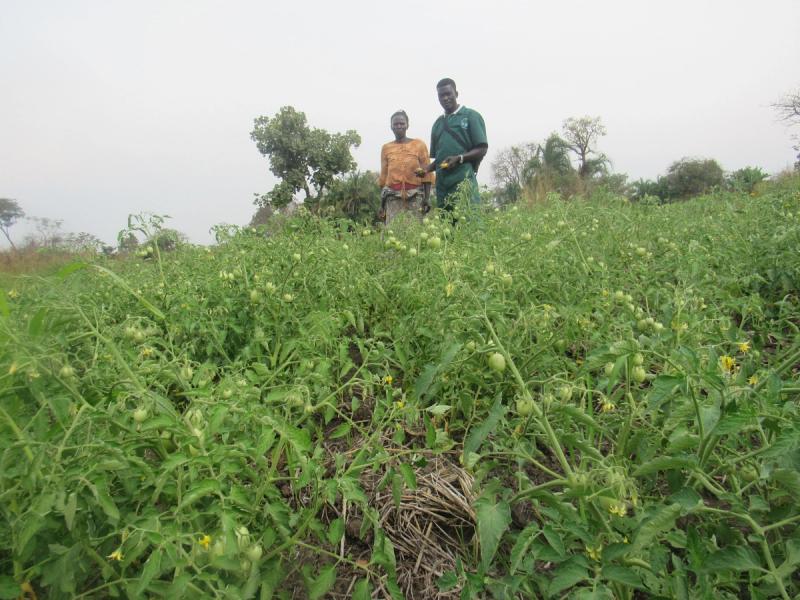
We trained 52 caregivers (mostly women affected by HIV and GBV) in cake baking, horticulture, and basic business skills. The intended outcome was “increased household income,” but we wanted to capture broader changes in confidence, family dynamics, and community roles.
How We Applied Outcome Harvesting
- Monthly harvesting: Facilitators documented changes during home visits and group meetings (“Outcome statements” like “Caregiver A started selling vegetables at the market and now pays school fees for two children without external support. ”)
- Community verification: In quarterly reflection meetings, caregivers reviewed and confirmed/changed statements.
- Staff substantiation: I cross-checked with VSLA records, school fee receipts, and child attendance data.
- Thematic coding: We grouped outcomes into income, education access, confidence/leadership, and family nutrition.
Key Outcomes Harvested
From 52 trained caregivers:
- 24 started independent micro-enterprises (baking, vegetable selling, poultry) for direct income generation.
- 31 children of trained caregivers who were previously not attending school consistently started attending school (fees paid from new income).
- 18 caregivers reported improved family nutrition (more vegetables consumed at home).
- 9 took leadership roles in the VSLA or community groups, an unexpected empowerment outcome.
- One caregiver started training others informally, a multiplier effect.
These results extended far beyond our original “income increase” indicator. They demonstrated ripple effects in child protection, household resilience, nutrition, and social capital.
How Outcome Harvesting Transformed the Program
Evidence for Scale-Up
Verified outcomes strengthened our case for forming and registering a caregiver-led Community-Based Organization (CBO), successfully achieved in 2025.
Program Adaptation
When leadership patterns emerged, we introduced basic governance and group management training in the next implementation phase.
Stronger Donor Reporting
Instead of presenting isolated percentages, we combined verified quantitative trends with validated outcome narratives, significantly improving funding renewal discussions.
Increased Community Ownership
Caregivers expressed that their real changes were seen and recognized. This deepened trust, participation, and accountability.
When to Use Outcome Harvesting
Best for:
- Complex social change programs (empowerment, behavior change, advocacy)
- Projects with multiple partners or external influences
- Situations where predefined indicators miss important changes
- Participatory learning cultures
Less ideal for simple, direct outputs (e.g., number of trees planted).
Outcome Harvesting flips the script: instead of forcing reality into our logframe, we let reality speak and then understand our contribution. It takes more time upfront but delivers richer, more credible evidence and stronger programs.
Ronald Obal
MEAL Manager & MEARL Specialist
Ronald Obal is a Monitoring, Evaluation, Accountability, Research and Learning professional focused on evidence systems for social impact programs in Uganda. With experience across mental health, child protection, education, and community development sectors.
Enjoyed this post? Follow for more.
Follow @real_obal