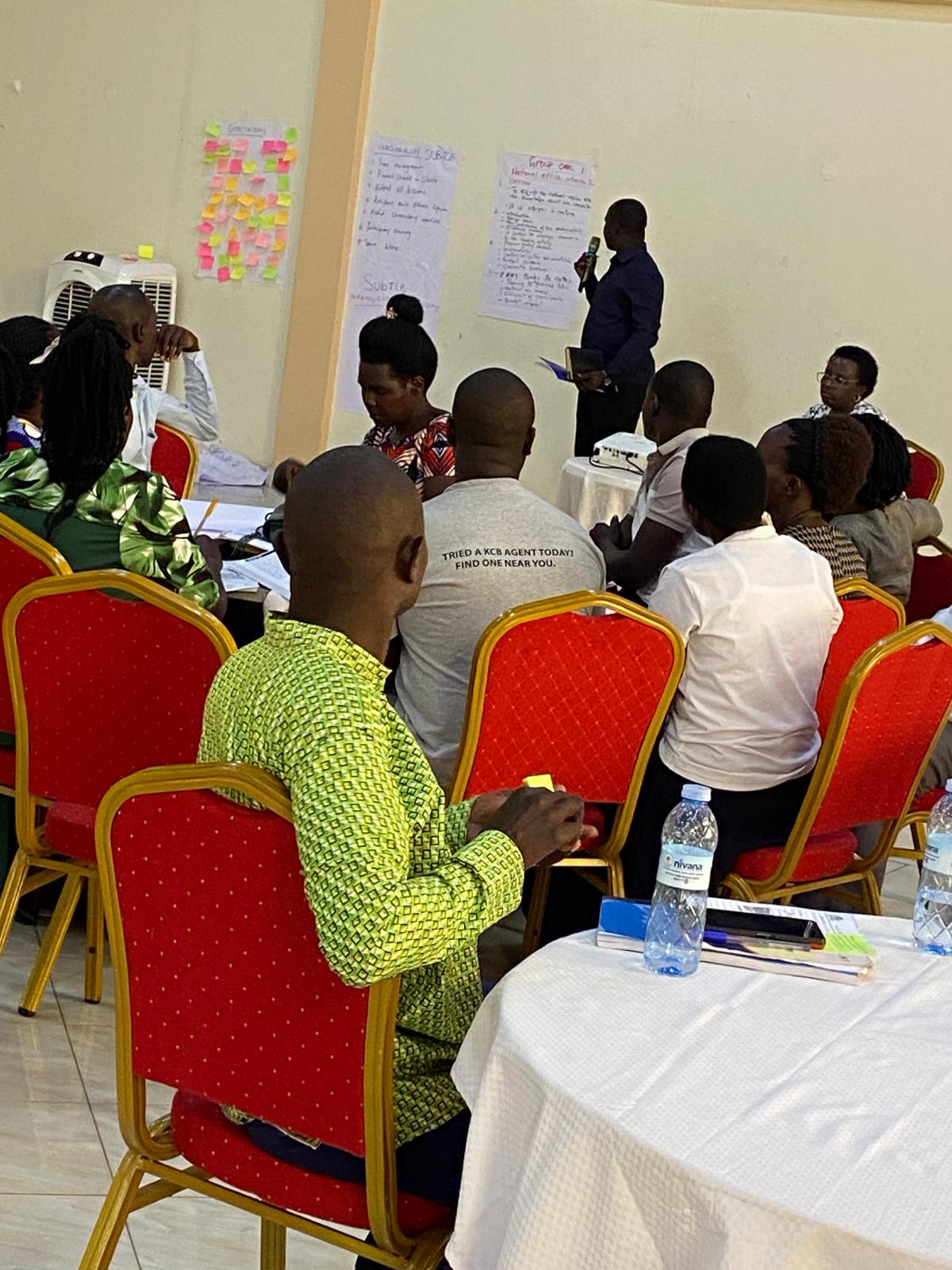
Mental health and psychosocial support (MHPSS) programming is growing rapidly in Uganda, especially in post-conflict regions like the North. Organizations like Mouthpiece Initiative for Mental Health and Addiction (MIMHA) are delivering counseling, rehabilitation, peer support, and community advocacy for people affected by depression, anxiety, trauma, and substance use disorders. But measuring outcomes in mental health remains one of the toughest areas in MEAL. Standard quantitative indicators often fail to capture the nuanced, non-linear nature of recovery. Over the past year at MIMHA, I’ve designed and refined systems to track client progress, program quality, and broader community impact. Here are the key challenges I’ve encountered and the practical solutions that have worked in our context.
Challenge 1: Is the Nonlinear Recovery
Unlike education programs (e.g., school enrollment) or livelihood programs (e.g., income increase), mental health improvement can include setbacks, relapses, triggers, or seasonal stressors.
Solution: Use repeated, short-interval measurement tools that track change over time rather than one-off baselines/endlines.
- We administer simplified versions of standardized scales (WHO-5 Wellbeing Index, PHQ-9 for depression, and GAD-7 for anxiety) at intake, 3 months, 6 months, and exit.
- Scores are tracked individually in a secure client database (encrypted Excel + KoBo for field entry).
- Visual progress lines per client help counselors see trends and adjust support.
Challenge 2: Stigma and Sensitive Disclosure
Clients and families may under-report symptoms due to stigma, especially around addiction or suicide ideation.
Solution: Build trust into data collection and use indirect/proxy indicators.
- Train peer counselors (many are recovered persons themselves); as enumerators, they build rapport faster.
- Include qualitative check-ins: “What has changed for you since starting the program?” captured via audio notes (transcribed anonymously).
- Use community-level indicators: reduced alcohol-related incidents reported by village health teams and family feedback on client functioning.
Challenge 3: Standard Tools Aren’t Always Culturally Appropriate
Direct translations of WHO-5 or PHQ-9 can feel foreign or miss local expressions of distress (e.g., “thinking too much,” common in Acholi culture).
Solution: Adapt and validate tools locally.
- We worked with local counselors to add culturally relevant items (e.g., “Do you feel your ancestors are angry with you?” or “Do you have persistent headaches without medical cause?”).
- Ran cognitive testing with 20 clients to ensure questions are understood the same way.
- Combine validated scales with a short, locally developed “Acholi Distress Checklist” for triangulation.
Challenge 4: Attribution Is Complex
Many clients access multiple services, such as church support, traditional healers, VHTs, or government facilities, making it hard to attribute change solely to our program. Solution: Shift toward contribution analysis and client-centered stories.
- Use Outcome Harvesting monthly: counselors document observed changes (“Client X reduced alcohol intake after 4 peer sessions”), and clients/submitters verify plausibility.
- Most Significant Change (MSC) technique: quarterly stories collected from clients and families, voted on by staff for “most significant.”
- These feed into donor reports alongside quantitative trends.
Challenge 5: Data Privacy and Security
Mental health data is highly sensitive; breaches could cause harm or deter participation.
Solution: Strict protocols from day one.
- All digital forms on KoBo/SurveyCTO use end-to-end encryption.
- Client names replaced with unique IDs; master list kept offline on password-protected drive.
- Staff sign confidentiality agreements; annual safeguarding refreshers are mandatory.
Real Impact from Our System
Since rolling out the improved MEAL framework in 2025 at MIMHA:
- Tracked progress for over 200 active clients across the Gulu centers.
- 68% showed clinically significant improvement on PHQ-9/GAD-7 after 6 months.
- 40+ Most Significant Change stories documented, used for advocacy and funding proposals.
- Program adaptations made: increased peer support groups after data showed better outcomes than individual counseling alone.
Measuring mental health outcomes requires flexibility, cultural sensitivity, and a mix of quantitative and qualitative methods. No single tool is perfect; triangulation and regular reflection are key.
Ronald Obal
MEAL Manager & MEARL Specialist
Ronald Obal is a Monitoring, Evaluation, Accountability, Research and Learning professional focused on evidence systems for social impact programs in Uganda. With experience across mental health, child protection, education, and community development sectors.
Enjoyed this post? Follow for more.
Follow @real_obal