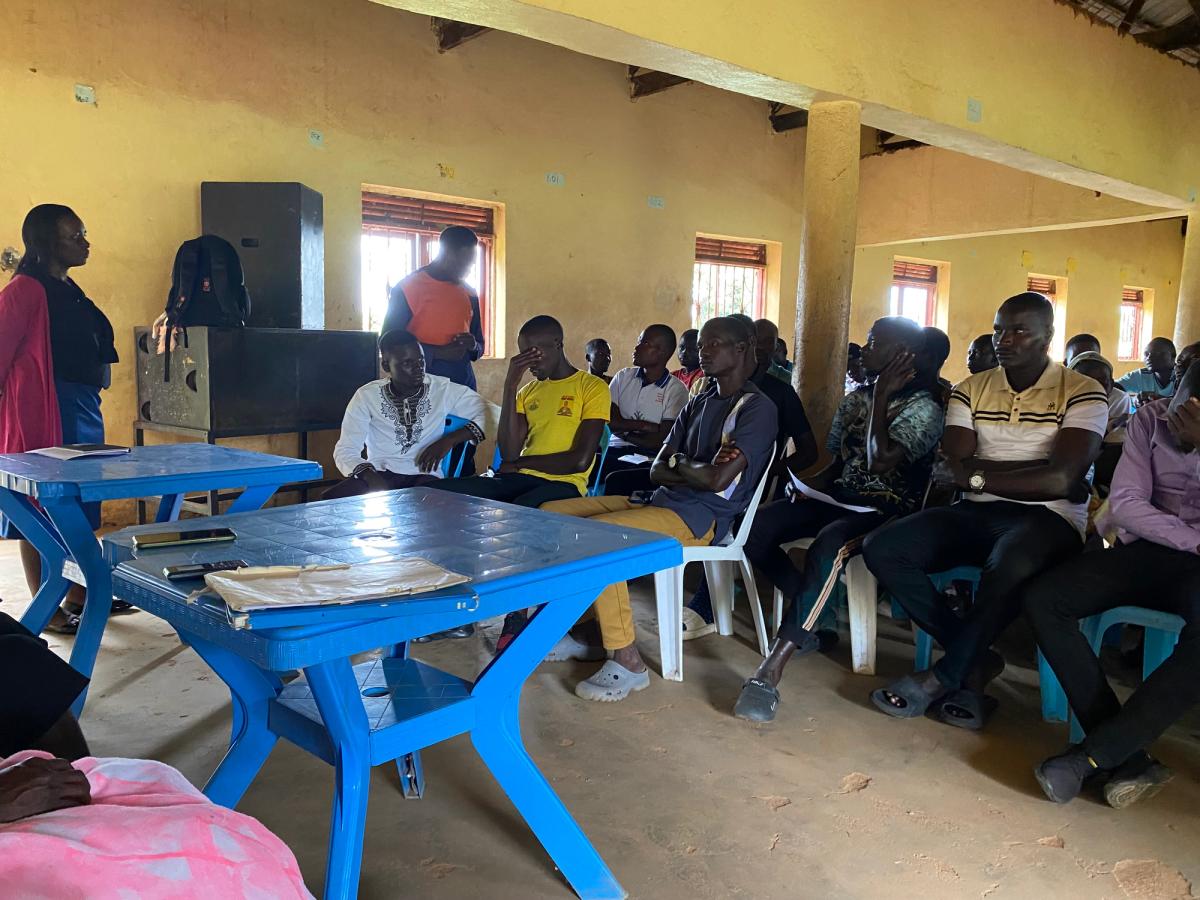
Youth Accountability in Uganda: Lessons for Improving Service Delivery
Young people in Uganda's North aren't silent because they have nothing to say. They're silent because nobody has given them a seat at the table yet. That gap between youth voice and policy response is precisely where service delivery keeps breaking down.
After years working with children, caregivers, and young people across Northern Uganda through school visits, radio programmes, and national advocacy platforms one thing has become clear: the communities that improve fastest are the ones that stop treating youth as beneficiaries and start treating them as partners.
This is what meaningful youth accountability looks like in practice, and why development professionals ignore it at their peril.
Accountability is not about reports. It is about being heard.
In Monitoring, Evaluation, Accountability, Research, and Learning (MEARL), we spend a lot of energy on data collection systems, quarterly indicators, and impact dashboards. These tools matter. But real accountability starts somewhere simpler: someone affected by a programme actually gets to speak, and someone with authority actually listens.
I saw this clearly during a youth accountability session in Gulu. A teenage participant explained that children in her school weren't dropping out because they had "lost interest in education" the explanation local administrators had settled on. They were dropping out because their parents couldn't afford exercise books and uniforms. The data said "absenteeism." The community knew the cause. Those are two very different things.
Field insight
Community data captures what happened. Only the people most affected can tell you why and only if you create the conditions for them to do so honestly.
What young people see that adults miss
When development projects are dominated by adult voices which is most of the time specific categories of information routinely go unreported. In Northern Uganda, intentional youth engagement consistently surfaces issues like:
- Education barriers: The real drivers of school absenteeism, early marriage, and dropout including cost pressures adults are reluctant to admit to figures of authority.
- Social and household challenges: Substance abuse, domestic neglect, and peer-level dynamics that formal surveys rarely capture.
- Health service failures: Adolescents navigate health systems differently than adults. When those systems aren't youth-friendly, young people simply stop using them and nobody notices until it shows up in clinic statistics years later.
- Economic exclusion: Young people understand the local job market from the bottom up. They can tell you exactly which skills training programmes are useless and which employers actually hire from the community.
None of this information is hidden. It is widely held among young people. The question is whether the accountability structures we build create any pathway for it to reach decision-makers.
What drives youth disengagement and what doesn't
Participation is not simply a matter of inviting youth to meetings. I have watched motivated young advocates disengage in real time when a district official dismissed their concerns without explanation, or when feedback from a community forum produced no visible follow-up. Disengagement is a rational response to being ignored.
The platforms that have worked best in our Northern Uganda programming share a few characteristics. They are not confrontational they frame accountability as a dialogue between communities and duty-bearers, not an attack. They use familiar formats like radio talk shows and peer discussion groups, which remove the intimidation of formal settings. And critically, they produce visible responses: when youth raise an issue and a local official follows up even to explain why they cannot act participation increases.

The three formats we've found most effective:
- Interactive radio: Accessible, anonymous enough to reduce fear, and wide-reaching. Young people call in or send messages; community leaders respond on air.
- Peer-to-peer discussions: Information travels differently through youth networks. Young people often share concerns with peers that they would never raise with an adult present.
- Community mobilisation forums: When structured with clear facilitation and explicit commitment from local leaders to respond, these generate the most substantive accountability outcomes.
The cultural barrier we rarely name directly
Across much of Uganda, children and young people are socialised to defer to adults in formal settings. Voicing criticism even constructive criticism of a service can feel like a violation of social norms. This is not an abstract cultural observation. It has concrete effects on what gets said, and what stays unsaid, during community consultations.
Creating safe spaces for youth is not complicated, but it requires deliberate design. In practice it means:
- Structuring some sessions without senior authority figures present, so young people aren't filtering their responses in real time.
- Providing mentorship and facilitation from trusted peers or youth workers, not outsiders in lanyards.
- Creating explicit platforms youth-led meetings, radio panels, school health committees where young people are not guests but conveners.
These are design choices, not expensive interventions. They cost planning time, not project budgets.
Why this is not optional for sustainable development
Uganda's youth population is not a future resource. They are the current majority. Any service delivery system designed primarily around adult assumptions about what communities need will fail to reach them and the failures compound quietly until they show up as health gaps, dropout statistics, and youth unemployment figures that development programmes then scramble to address.
When youth accountability is built into programme design from the start, three things happen consistently:
- Leaders are held to higher standards. Not through confrontation, but because they know the next generation is watching and has a platform to speak.
- Programmes build ownership. Young people who shape a programme defend it. They tell peers about it, troubleshoot it, and sustain it between funding cycles.
- Services actually improve. Health facilities that receive direct feedback from adolescents adapt their hours, their language, their referral processes. This does not happen from a questionnaire administered by an external M&E team twice a year.
The takeaway for practitioners
Youth accountability is not a formality to satisfy a donor log frame. It is the mechanism through which communities correct their own course. When local leaders make space for young people to speak really speak they don't lose authority. They gain the kind of insight that makes their decisions actually work.
The most durable solutions I have seen in Northern Uganda did not come from the top of an organisational chart. They came from a teenager in a radio studio, or a group of young women in a peer discussion circle, pointing out something obvious that adults in the room had simply stopped seeing.
We already know how to listen. The question is whether we choose to.
Ronald Obal
MEAL Manager & MEARL Specialist
Ronald Obal is a Monitoring, Evaluation, Accountability, Research and Learning professional focused on evidence systems for social impact programs in Uganda. With experience across mental health, child protection, education, and community development sectors.
Enjoyed this post? Follow for more.
Follow @real_obal